
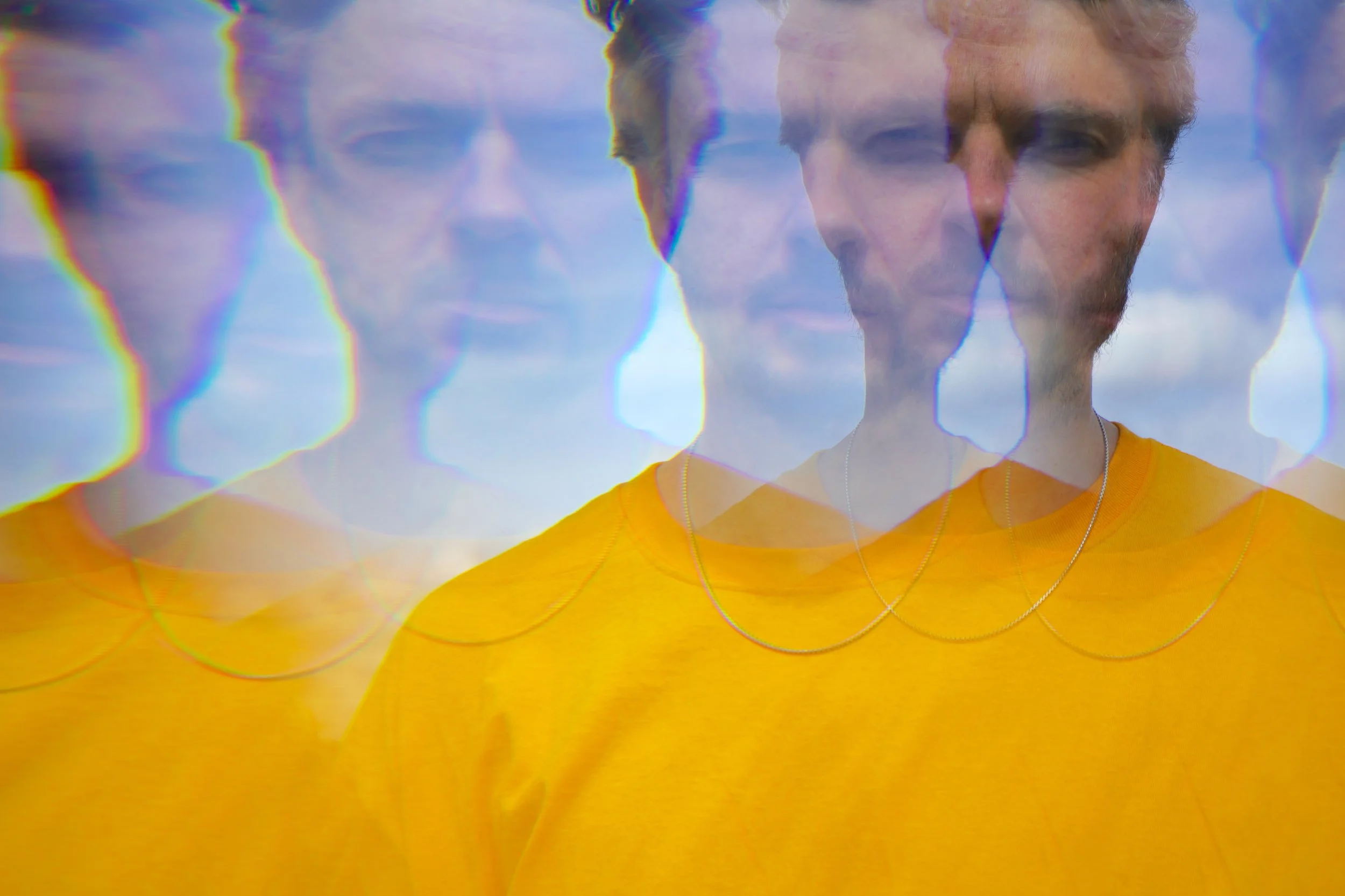
Unfold: TOM SKINNER
TOM SKINNER HAS SPENT TWO DECADES SHAPING BRITISH MUSIC WITH A RARE KIND OF PATIENCE — FROM SONS OF KEMET’S DOUBLE-DRUM FIRE TO THE RESTLESS TENSIONS OF THE SMILE; FROM DAVID BYRNE TO GRACE JONES; FROM FLOATING POINTS TO MULATU ASTATKE. A MUSICIAN WHO TREATS TIME NOT AS SOMETHING TO FILL, BUT AS SOMETHING TO HOLD. KALEIDOSCOPIC VISIONS, HIS SECOND SOLO RECORD, IS BUILT FROM THAT PRINCIPLE: TURNING IMAGES WHERE MEMORY, FAMILY AND SOUND CONTINUALLY REARRANGE. NEIL HOUSEGO MET WITH SKINNER TO TALK ABOUT TIME FOLDING BACK, RHYTHMS CARRIED FORWARD, AND WHAT DEVELOPS WHEN YOU WAIT.
Tom Skinner is talking about Paul Thomas Anderson's Licorice Pizza when something shifts. Not because he's describing the plot, or the period. It's smaller than that. An object. A phone. The way the girl picks it up. Tom stops mid-sentence.
"My grandparents had a phone exactly like..." he starts, then corrects himself, as if the correction matters. Not a phone like it - the phone itself. The receiver held a certain way. The light in the room. The air around it. "I can smell it as well. I can smell, you know, the air in that place."
Not remember the smell. Smell it.
The film is set in the early seventies, before Tom was born, but it still catches him. He grew up in London but spent childhood summers in California, where his grandparents had emigrated in the fifties. His mother was the only one of three children who came back to England. The rest of the family stayed. So when he watches the film, time folds and the distance collapses. The phone is his phone. The air is his air.
His new album is called Kaleidoscopic Visions. The title might scan as psychedelia, but the record doesn't swirl - it turns, the way a kaleidoscope turns, the same fragments rearranging into new geometries.
When I tell him how often I've returned to "The Maxim"- how the track has stayed in my week since September, four, five, six times, as if it's not quite finished with me. He goes quiet for a beat, then says, simply, that it was "quite a long process."
Meshell Ndegeocello's voice enters the track slowly. Not as an arrival, but as a presence that had already been prepared for. A china cymbal sets the boundary of the room. The bass drum doesn't keep time; it opens space around her voice. Tom first saw her perform at Glastonbury in 1994, a teenager, watching from the crowd. Thirty years later, he sends her two twenty-minute improvisations built around loops - "quite a lot of information" in them, but loose, unresolved. He knew the two sections belonged together though. He didn't know how.
"I didn't really know what I was asking of her."
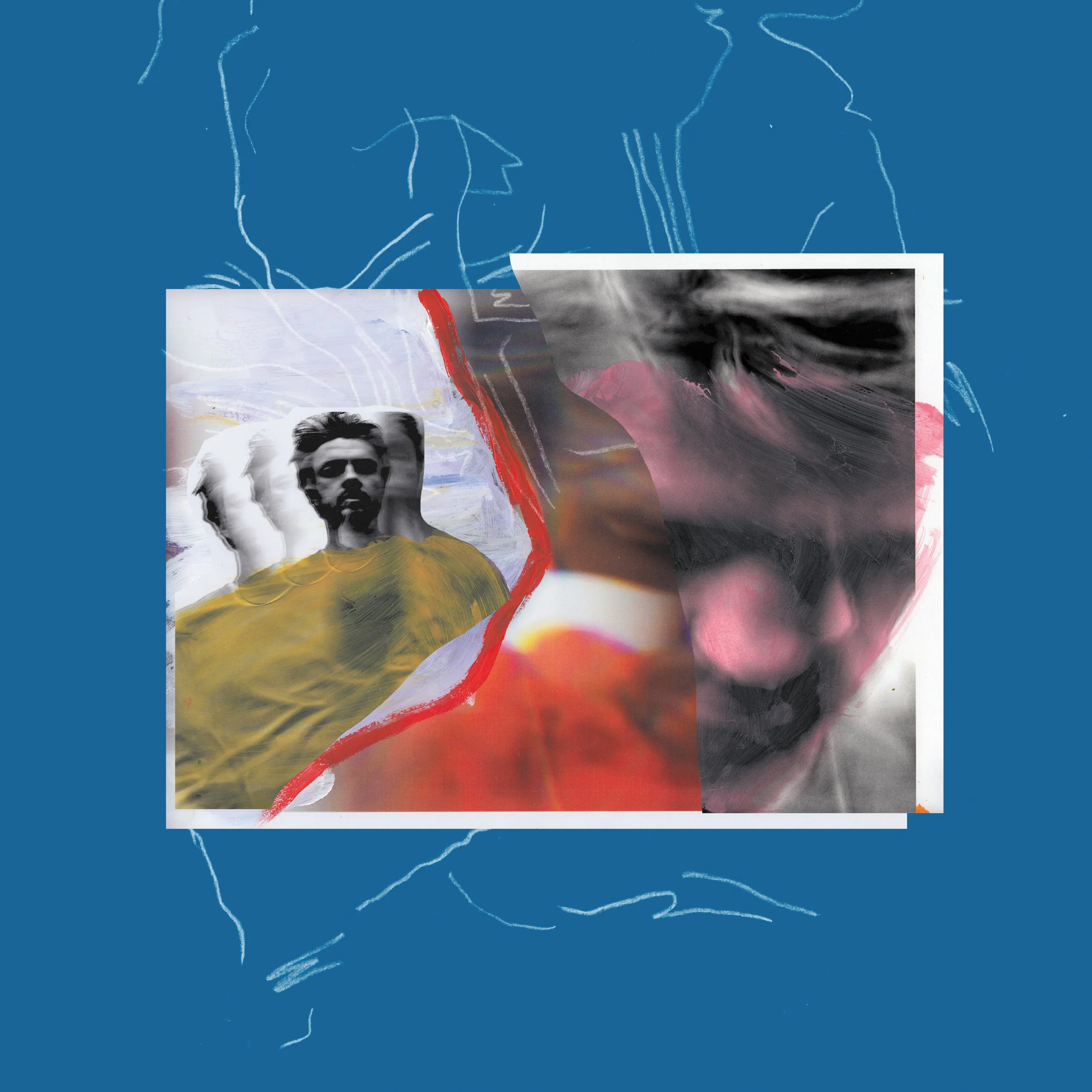
While he waits, he reworks the second section with her voice in mind before she's sung a note - tape delay through an old Echoplex, the picked guitar, working to shape space around a timbre he'd carried since he was a teenager. When her parts finally arrived after six months, voice, keys, the lyrics she'd written — they cut straight to what the album had been circling: we are here, soon to return home.
"To be honest, I didn't really know what the album was about. I think I was still trying to figure it out." Not a confession. A description of method. Meaning arriving late, like an image after chemistry.
Later, he tells me about the Super 8.
Eighteen rolls his grandfather shot, from the sixties, seventies, California, England, a wedding and Tom's mother never had them processed. They sat for decades in a box: not lost, not destroyed, simply latent. The images sealed in the emulsion the whole time.
A friend of his - filmmaker Sam Blair - has a projector. They'd grown up in the same part of London, orbited the same inner-city scenes in the nineties, never met until recently. One evening they thread the reels and start watching. Tom calls it "scraping the surface": too much footage, too many lives, to finish in one sitting.
What strikes him first isn't the time travel. It's the care. A California swimming pool, the turquoise almost impossible, the light held steady. London streets, red buses, the Underground sign, a sheepskin shop and his grandfather tracking a man in a dark suit as he crosses the frame. The camera doesn't shake. Some reels had been cut together into longer sequences, not just recording and gathering, but structuring.
"He obviously took it seriously," Tom says.
Some of the reels run longer. Around ten minutes.
As rhyme.
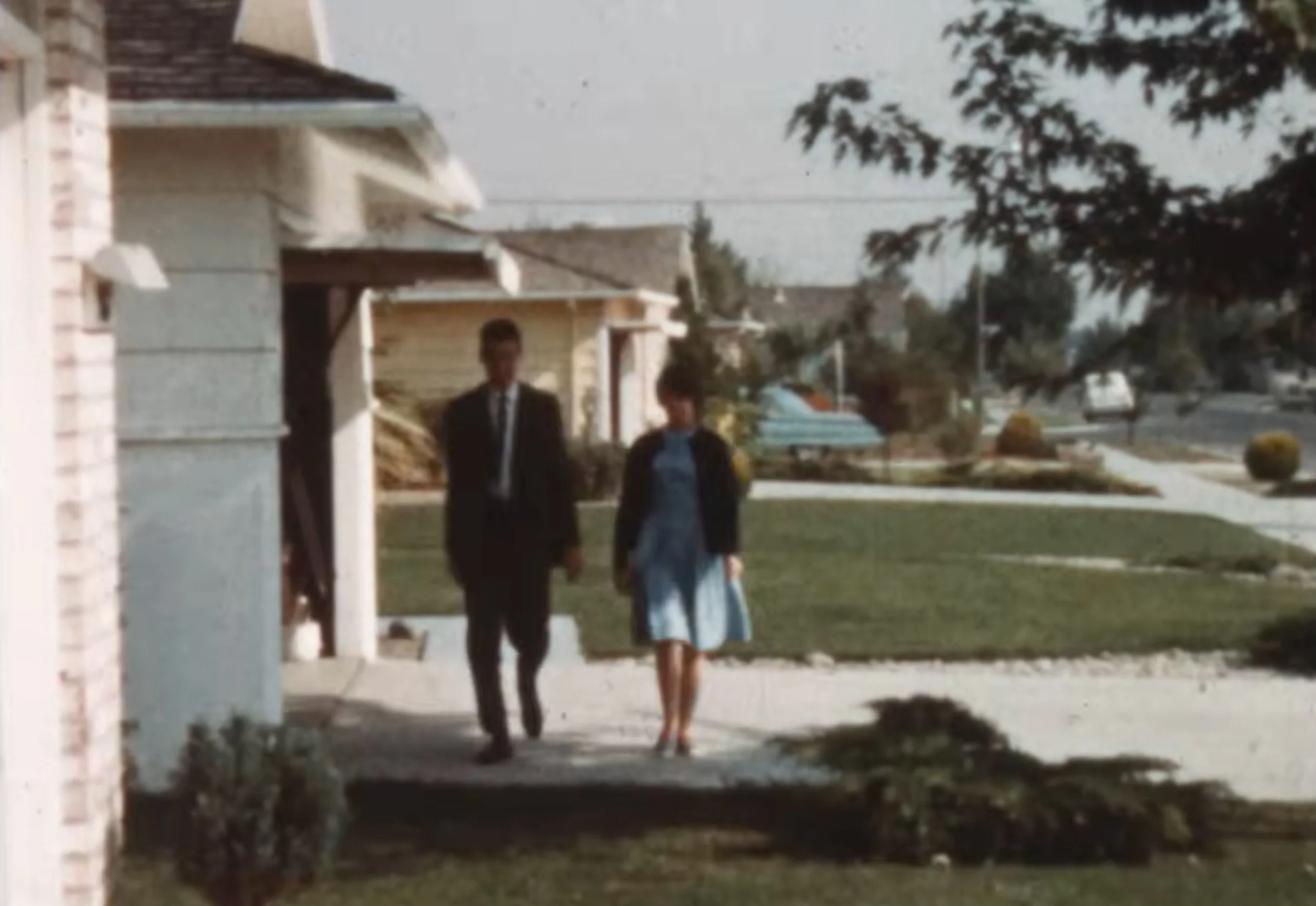
Still from "The Maxim" directed by Sam Blair. Super 8 footage courtesy of the Skinner family archive.
Outside the tenderness of a box at his parents' house, there's another kind of unprocessed. The conversation drifts from reels to rooms. Nights that never quite develop into a scene. Ideas that don't get the chemistry of repetition and audience and time. Midweek jazz rooms with twenty-five people, half there for dinner. Touring outside London with five or six players rarely makes economic sense.
It isn't that anyone is stopping the music. It's that the conditions that let it appear - the slow build, the return, are sometimes absent, sometimes impossible.
He calls the situation "precarious."
He grew up playing with Tom Herbert, with David Okumu, rehearsing constantly, writing pieces, trying to play the records they were listening to. Just trying to get inside the music. "I didn't have anything else to really worry about," he says. "So I could just concentrate." He put himself in front of older players. A pickup gig years ago: an older tenor player, a ballad. Tom was young, into modern playing, so he started pushing the rhythm, adding complexity. Mid-song, the saxophonist turned around. "It's a ballad. What are you doing?" Tom doesn't defend himself now. He doesn't romanticise the correction either. "Maybe he was right," he says. Just that.
That's the chemistry. The room, the repetition, the correction. Without it, nothing develops.
With The Smile, his group with Thom Yorke and Jonny Greenwood, for whom he's also played on Paul Thomas Anderson soundtracks —the pace is different, but not the principle. They write during sound-checks. Sometimes play songs live before they've recorded them. "We'll have half an hour," Tom says, like it's nothing, like that's plenty. "We'll just work on new stuff." But that kind of freedom has a discipline underneath it. Knowing when to play means knowing when not to. Too much rehearsal and the thing freezes before it's found its shape.
For him, jazz has never been a genre. It's a way of finding out what only you can sound like.
Max Roach had a percussion ensemble in the seventies called M'Boom. Tom got obsessed with it, not really the virtuosity, but the writing. Tuned percussion, melodic, structured. "Not shreddy," he says. There's a Joe Chambers piece on one of the albums called "Circles," built around a bell pattern in five. Tom learned it, internalised it, then lifted the rhythm and wrote the piece "Margaret Anne" around it.
Lifted.
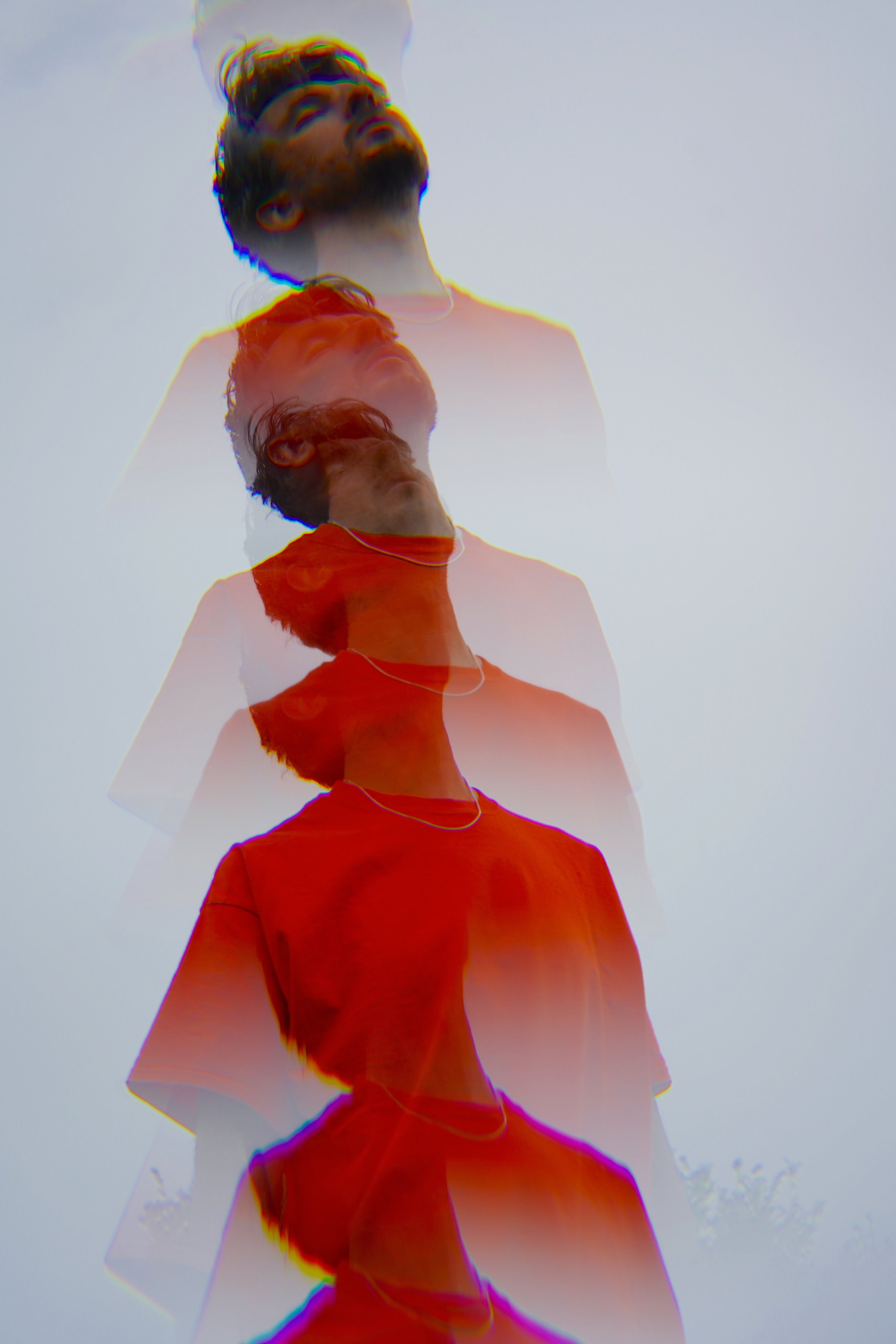
When I ask who he's making music for now, there's a pause. Then: his children. Three boys. Watching them grow, he says, has become a way of learning himself - finding out who he is by noticing what has already been passed on.
Somewhere in those eighteen rolls is a version of Tom before memory, before intention. He talks about needing space after finishing a record maybe not rest, exactly, but time for something to settle. Processing doesn't end when the work is done.
Near the end of our conversation, he mentions a cymbal. A 1960s Paiste Giant Beat ride that lives at Fish Factory, the studio where the album was recorded. He used it every session. He's tried to buy it; the owner won't sell. He's been looking for another - online, through dealers, in shops.
"I still haven't managed to find one."
Even if he did, it wouldn't sound the same. Not because the cymbal would be different.
The phone in Licorice Pizza can collapse time, but it can't restore it. The Super 8 footage can surface an image, but it can't bring his grandfather back. The lifted rhythm can carry M'Boom forward, but it can't return that world intact.
What they offer instead is something slower. Light. Time. Attention, given.
The reels sat in a box for decades. The images were there the whole time.
Kaleidoscopic Visions by Tom Skinner is out now on Brownswood Recordings / International Anthem
Photography by Jason Evans